A pact decades in the making
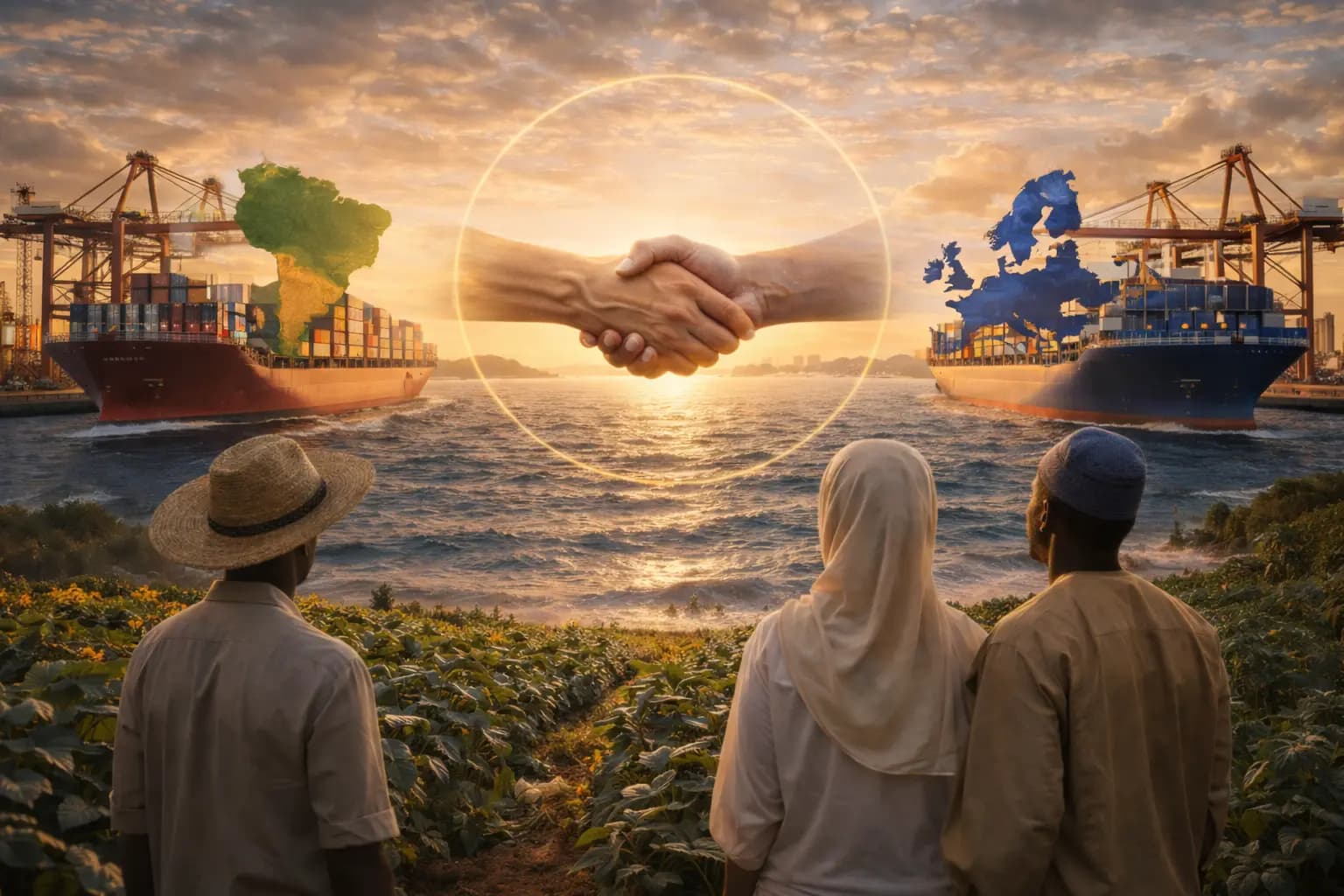
After a quarter-century of haggling, the European Union and Mercosur bloc (Brazil, Argentina, Paraguay and Uruguay) have finally sealed a free-trade agreement. The deal creates one of the world’s largest free-trade areas, liberalising over 90% of goods exchanged between Europe and South America. It promises to slash tariffs on everything from German machinery to Brazilian beef. In Brussels and Brasília, officials tout it as a geopolitical win – a signal of openness in an era of creeping protectionism. But as Europe cosies up to Latin America, Africa is watching closely. For African economies, the Mercosur–EU pact portends both threats and opportunities in their own vital trade ties with Europe.
Threats to African trade flows
Europe remains Africa’s biggest customer, buying roughly a quarter of the continent’s exports. Many African countries enjoy preferential access to EU markets under past agreements. Now they face a formidable new competitor. The Mercosur deal will eventually eliminate most duties on South American exports to Europe. Hefty tariffs on Mercosur’s agricultural goods – beef, poultry, sugar and the like – will be phased down within quotas. Even these limited openings could undercut African exporters. For example, southern African beef producers who supply Europe under quota may see Latin American beef muscle into their market share. West African sugar and citrus, long sheltered by EU preferences, will compete with increased volumes of Brazilian cane sugar and Argentine oranges entering Europe at lower tariffs. African farmers fear that cheap South American grain, meat and fruit will erode the value of their own exports.
European farmers are worried too – and their backlash could spill over onto Africa. EU farm lobbies, alarmed by Mercosur’s competitive might, are pressing Brussels to enforce stricter health and environmental standards on all imports. That means African produce will face the same high bar as Latin American goods. Such “mirror clauses” (requiring foreign foods to meet EU pesticide and sustainability rules) might be aimed at Brazilian mega-farms, but they also raise costs for a Kenyan vegetable grower or a Moroccan citrus exporter. South Africa’s orange growers have already felt this squeeze: the EU recently imposed new cold-treatment rules on African citrus, officially over pest concerns but largely to shield Spanish orchards from outside competition. As Europe throws open its doors to Mercosur, Africa worries that it might get caught in a crossfire of higher standards and stiffer competition in the EU market.
A test of industrial competitiveness
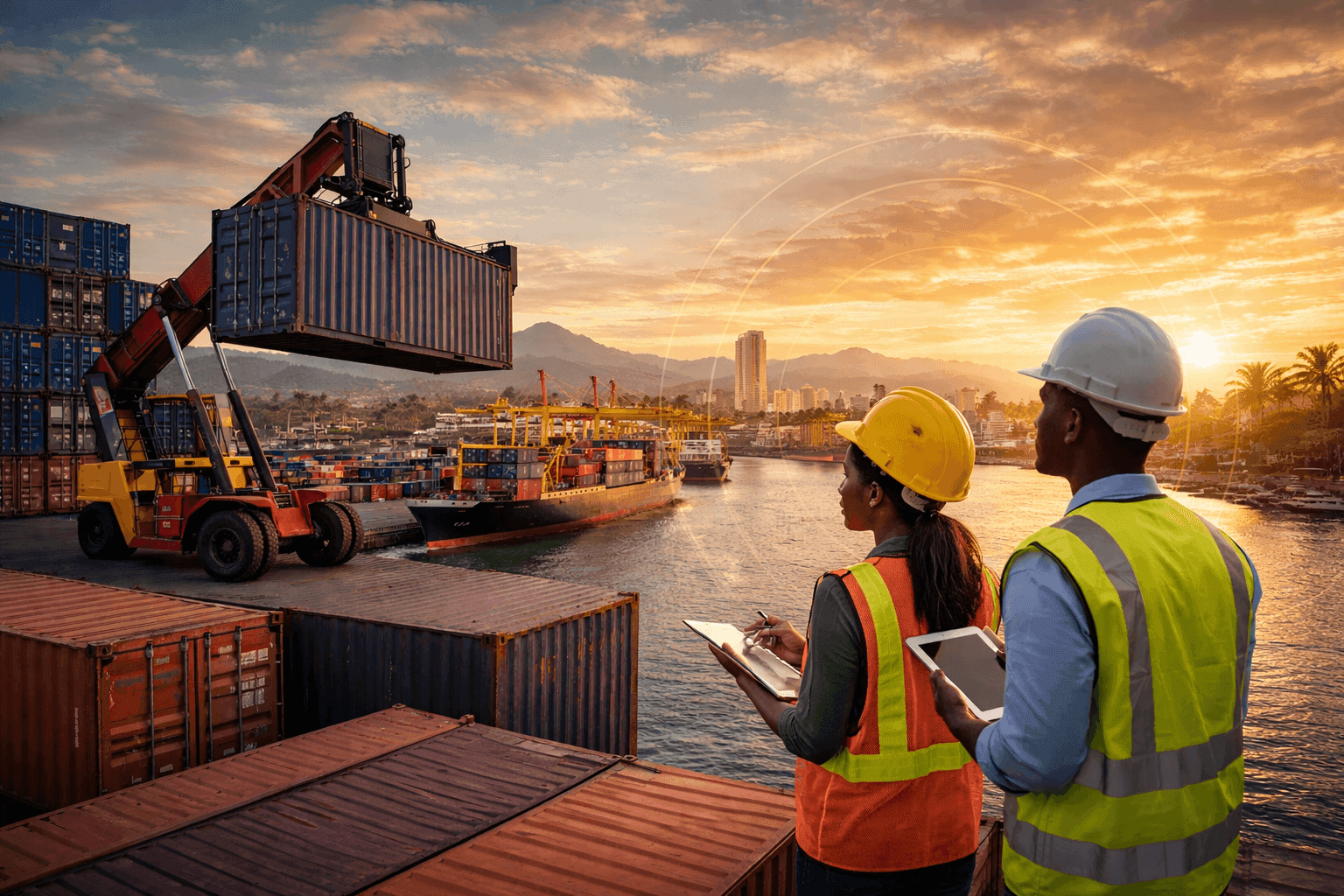
The Mercosur pact is not just about farm goods. It also opens Europe to more manufactured products from Brazil and friends. Latin America’s industrial base – from Brazilian automobiles to Argentine textiles – now gains easier access to European customers. African manufacturers, by contrast, are still climbing the value chain. Outside a few pockets like Morocco’s car assembly lines and Ethiopia’s garment factories, most African economies export raw materials rather than finished wares. The new transatlantic deal could sharpen the competitive contrast. A car part made in Mercosur will enter Europe tariff-free (Mercosur’s 35% duty on EU car parts will likewise vanish, boosting joint supply chains). European firms seeking lower-cost production might now look to South America with fresh eyes – potentially diverting some investment away from Africa. In industries such as chemicals, steel or machinery, African countries could find it harder to lure European factories if Latin sites become more profitable under the free-trade umbrella. Simply put, Mercosur’s gain in industrial market access risks becoming Africa’s loss unless African nations improve their own competitiveness.
Supply chains may be rejigged in subtle ways. Europe’s drive to reduce reliance on China has it scouting for “friend-shoring” partners to source inputs and assemble goods. Mercosur’s large markets and existing industrial capacity make it an attractive partner. African countries will need to work harder to position themselves as equally attractive alternatives. Governments from Cairo to Cape Town may respond by accelerating business-friendly reforms, investing in infrastructure and negotiating better EU market terms. The African Continental Free Trade Area (AfCFTA) is a start – unifying the region could eventually give Africa more clout to strike continent-wide trade deals akin to the EU–Mercosur pact. For now, however, Africa faces a challenge: to convince Europe that it should be as integral in EU supply chains as Latin America is poised to become.
Strategic sectors and the green energy race
Not all is doom and gloom. The Mercosur agreement might also spur opportunities for Africa in strategic sectors. Take green energy. Europe’s green transition will demand vast quantities of clean power and critical minerals – and here, multiple suppliers are welcome. South America can ship biofuels, lithium and copper to Europe under friendly trade terms. Africa, rich in cobalt, rare earths, solar irradiance and wind, can likewise be a major supplier of the inputs for electric cars and renewable power. In fact, Africa holds some aces that Mercosur cannot match. North African nations are geographically adjacent to Europe, making them natural partners for exporting electricity via undersea cables or green hydrogen via pipelines. Morocco, for instance, is investing heavily in solar farms and has plans to send green electrons directly to EU grids. It is easier to transmit sunshine from the Sahara to Seville than from the Amazon. As Europe hungers for clean energy and battery materials, Africa can carve out a complementary role, ensuring it remains central to EU plans for climate-friendly supply chains. The Mercosur deal, by diversifying Europe’s suppliers, underscores that Africa must capitalise on its own strengths – from geothermal potential in East Africa to platinum for fuel cells in Southern Africa – to stay competitive in the emerging green economy.
Moreover, Europe’s insistence on sustainability in trade could play to Africa’s advantage in the long run. The EU is rolling out rules to bar imports linked to deforestation and high carbon footprints. Mercosur agribusiness faces scrutiny over Amazon rainforest loss. African producers, if they adopt greener practices, could find an edge by branding themselves as sustainable partners. For example, Ivory Coast and Ghana – both major cocoa exporters – are working to curb deforestation in their cocoa supply chain to satisfy Europe’s new rules. A world of tougher environmental standards may actually level the playing field with Mercosur’s giants, allowing smaller African exporters to compete on quality and sustainability rather than sheer volume.
Morocco’s balancing act
No African country has more at stake in this shifting landscape than Morocco. Perched on Europe’s doorstep, Morocco has spent decades deepening its economic ties to the EU. It already enjoys an association agreement granting tariff-free access for Moroccan industrial goods and selected farm products. Moroccan factories churn out cars and aerospace parts for European markets, while its farms send a steady stream of tomatoes, citrus and olives across the Mediterranean. This special status has turned the kingdom into one of Africa’s export powerhouses. Yet the EU–Mercosur accord could narrow Morocco’s edge. If Brazilian agribusiness can send more duty‑favoured beef or orange juice to Europe, European importers might rely a bit less on Moroccan farmers. And if Mercosur-made textiles or cars enter Europe more freely, Morocco’s appeal as a manufacturing hub could dim slightly – especially for industries where it competed mainly on being tariff-free.
Morocco is responding shrewdly. It has sought deeper trade accords of its own – pursuing a “deep and comprehensive”free-trade upgrade with the EU and even eyeing a deal with Mercosur itself. Rabat knows it must stay plugged into global networks to avoid being sidelined. Moroccan officials highlight the country’s reliability and proximity. Tangier’s factories can put a finished product on a truck to Europe in a day or two, an agility unattainable for Mercosur suppliers shipping across the Atlantic. Morocco is also leveraging its role as a bridge to Africa. European firms investing there gain not just the Moroccan market but a gateway into West and Central Africa, where Moroccan banks and companies have a strong footprint. And on green energy, Morocco is racing ahead – its solar mega-projects and planned hydrogen exports are poised to make it an indispensable energy partner for Europe. The EU, for its part, appears keen to keep Morocco close: it is even tweaking trade rules to extend Moroccan tariff benefits to Western Sahara, a contested territory, in a bid to cement ties. All this suggests that Morocco, while mindful of new competition from Latin America, is positioning itself to thrive alongside the EU–Mercosur axis, not be eclipsed by it.
Embracing the new trade era
For Africa as a whole, the Mercosur–EU free-trade agreement is a wake-up call. It signals that Europe is broadening its economic horizons, courting distant partners to secure commodities, markets and geopolitical allies. African nations cannot afford to be complacent in Europe’s evolving trade orbit. The threats are real: some African exports will face tougher rivals and higher standards in Europe, and investment dollars might be diverted elsewhere. Yet the opportunities are equally tangible. By raising competitiveness at home and deepening regional integration, Africa can present itself as the next logical partner in the free-trade boom. The continent’s youthful population, growing markets and abundant resources remain a strong lure – if paired with the right policies. A more open global trading system, spanning Europe, the Americas and beyond, need not leave Africa behind. It can instead spur Africa to negotiate better deals, upgrade industries and adopt greener standards that meet the demands of Europe’s consumers.
In the end, trade is not a zero-sum game. Europe’s import needs are vast and varied enough to accommodate both Latin American soybeans and Kenyan tea, Argentine beef and Namibian fish. The Mercosur pact may shift some patterns, but it also underscores a broader trend of economic diversification that Africa can harness. African governments and businesses should seize this moment to adapt and advocate – ensuring that when Europe looks south for its next trade partnership, the African continent is ready. In a world of new alliances and rivalries, Africa’s best response to a Mercosur–EU rapprochement is to get organised, get competitive, and stay in the game. The winds of free trade are blowing across the Atlantic; Africa’s challenge and opportunity is to catch those winds in its sails.